

The European Union’s regulators continue to crack down on loud pipes, with new policy that says aftermarket manufacturers must make their exhausts tamper-proof, so as to fend off DIY modification.
The EU has been fighting loud pipes for years, combining regulations with so-called “noise cameras” that will pinpoint which exact bike that is producing excessive decibels, and mail the owner a ticket. Or at least, that’s the idea.
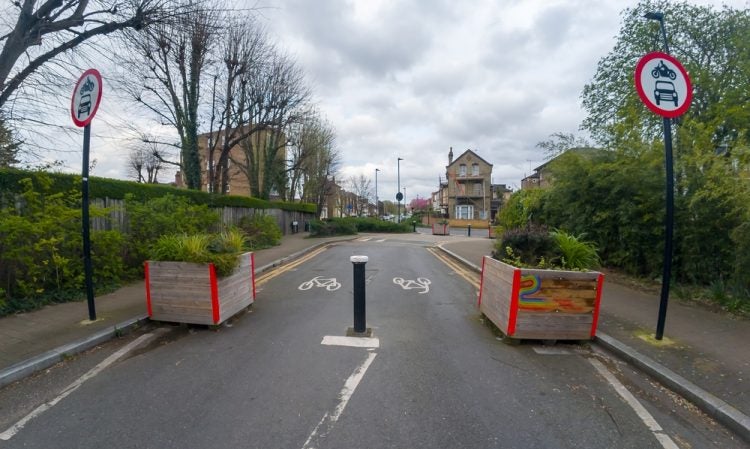
No-emissions zones and other laws are also starting to ban motorcycles from some Euro urban areas. Photo: Yau Ming Low/Shutterstock.com
But there are still loud bikes all over Europe, as owners exploit loopholes in the regulation. Aftermarket pipes sold in the EU must comply with the laws for noise and pollution emissions, but some owners buy them and just gut the exhaust so they can make it as loud as they want. Other riders install aftermarket exhausts with valves that can be closed to meet the regulations, then opened to make more noise.
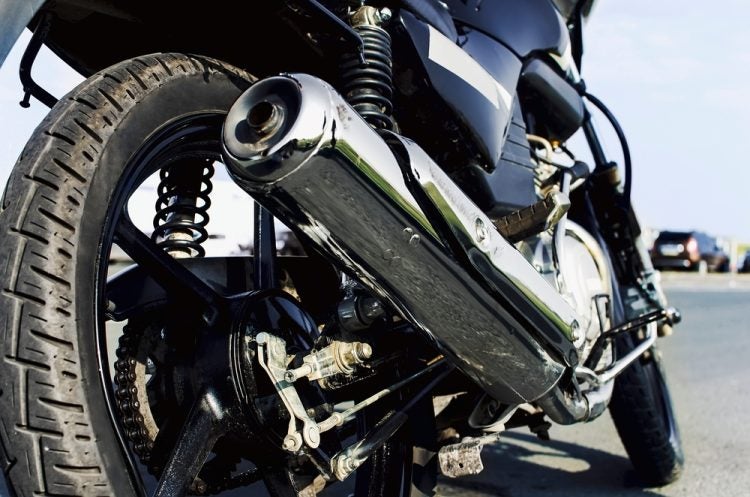
Under the new rules, aftermarket manufacturers must manufacturer their exhausts so as to be very difficult to modify. Photo: NataVilman/Shutterstock.com
Enabling that sort of thing is now verboten, thanks to the latest EU rules. You can see the full documentation here, but the important part is this: Aftermarket exhaust manufacturers are now required to make their exhausts difficult to modify, and they cannot be programmed to automatically open internal valves to increase noise. The EU’s suggestions for tamper-proofing the exhaust include the following wording:
Welding is considered a primary tamper proofing construction method for metals and alloys.
3.2.2. Possible tamper-proofing attachment methods:
(a) welding of a sufficient perimeter to avoid removals
(b) permanent gluing of a sufficient perimeter to avoid removals
(c) use of sufficient and expedient stainless-steel rivets
3.2.3. The following attachment methods are in any case deemed insufficient:
(a) threaded fixing
(b) aluminium rivets
(c) circlips
(d) conventional fasteners3.2.4. Possible attachment points:
(a) the exhaust casing
(b) the exhaust pipe in the exhaust silencing system
(c) the exit cone only when the two following conditions are satisfied:
– the exist cone is a fixed part of the exhaust silencing system, and
– the exit cone does not allow the removal of any of its parts.3.3. Good practices for components of the NORESS that do not contribute to the sound attenuation performance
3.3.1. Cosmetic end caps may be attached with conventional fasteners if:
(a) the removal of the end cap does not facilitate removal of baffles or other attenuation devices, and
(b) the cosmetic end caps are not part of the silencing or expansion chambers.3.4. Good practices for software of the NORESS (if any)
3.4.1. Possible tamper proofing methods for software:
(a) use of a sealed control box that shows signs of opening when software is changed
(b) protection of the interfaces to update software
– via access control measures
– via the logging of version management (to compare the last safe date with the initial software version safe date).
They’re taking this very seriously. They want your exhaust welded shut and the electronics to be modification-proof.
Is this a step too far, or have the loud-pipes-save-lives crowd pushed their luck to the breaking point? For what it’s worth, the European association of motorcycle manufacturers (ACEM) says it is in favor of the new laws.