
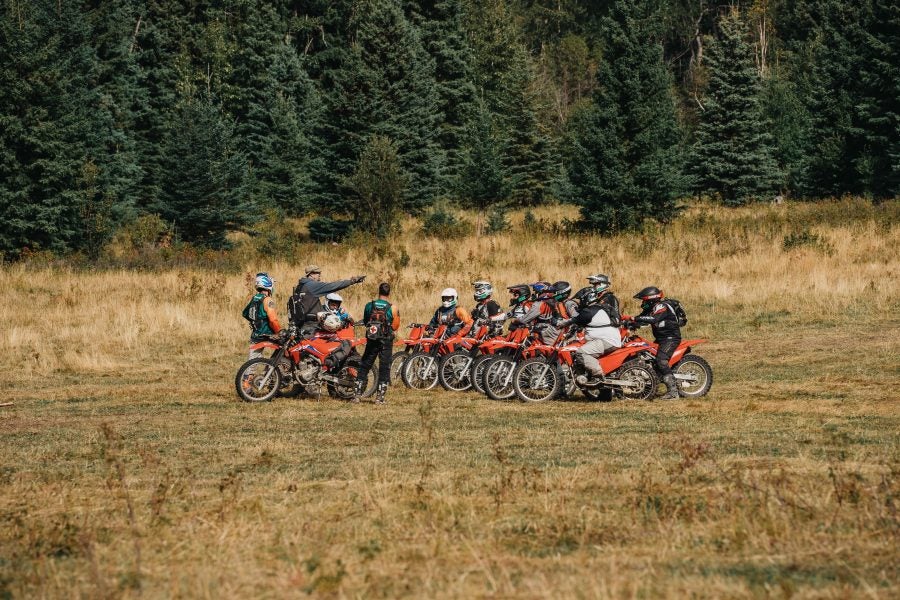
“Watch me,” said Dallas Shannon, our chief instructor for the week. “Look—have you ever seen an inbred hillbilly trying to pick up women at a bar, with lousy dance moves? Well, that’s what your body position looks like on your bike.”
Alas, he was right. A few days into our sojourn at Traction eRag’s XTADV riding school, I was once again reminded that I didn’t know as much about dirt riding as I should. Thankfully, I was in the right place to learn.
***
A bit of background on Traction eRag: Back before Internet publishing was replaced by Instagram influencers in their underwear, Traction was a sort of underground dirt bike publication distributed via PDF. It was funny, irreverent, filled with expert advice… and a really hard way to make a living. Eventually, publisher Dallas shut down the magazine and focused on dirt-riding tours and training camps in British Columbia. He still makes “content” sometimes with his friends Barry Morris of the Cross Training Enduro/Cross Training Adventure YT channels as well as genius mechanic Chuck Harder, who is Dallas’s neighbor and works with him. But these days, the eRag is really about the tours and training, not about entertaining people.

That’s Dallas under that hat. The broad-brimmed hat is a practical idea in the sun, but he’s actually a rancher, too. The XTADV camp is based on his ranch’s property, and you’re literally riding the range as you roll around the facility. There are plenty of cattle on-site, and in fall, Dallas and friends use their dirt bikes in the round-up. Photo: Nick Dunlop
And the marketing for those tours is intense. There’s lots of talk about how tough it is, and one eRag tour was enough to make Yammie Noob say he was quitting dirt bikes for good. So, I wasn’t quite sure what I was in for—all I knew was, I was staying in a cabin for a week on the eRag ranch, and riding dirt bikes as part of the XTADV program, which is designed to help riders become comfortable off-road. The idea is to develop dirt skills on small, easy-to-ride trailbikes, teaching clutch/brake/throttle/balance skills that can then translate to larger machines.
After a long flight and a long layover in the Vancouver airport, I got on a propeller plane for the milk run to Kamloops’ tiny airstrip, where myself and BJ Hessler (of DC Dirt Camp) were the last people to be greeted by eRag trainer/staffer Max, and stuffed into a sprinter van driven by trainer/staffer Tim, with the rest of the week’s campers/trainees. Forty-five minutes later we arrived at a circle of cabins wayyyyy out in the sticks, surrounding a big campfire. We got the basic layout of the property, the camp rules, and then it was time for bed. We had better be ready for breakfast at 7 AM, and be on our bikes at 9 AM, geared up, we were told—or we’d find out how Tim earned his nickname of “Satan.”
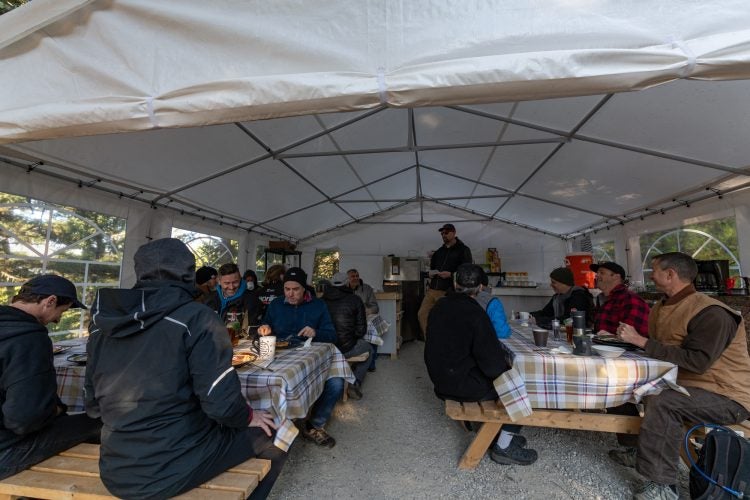
This large wall tent doubled as a hall for rider meetings. Photo: Nick Dunlop
***
It was cold, early-fall deer-season cold when we got up in the morning; I wished I’d packed a proper coat like my cabin roommate Riley. Like me, Riley had plenty of years of dual sport and ADV riding under his belt, with a learning curve he documents under the Awesome Players YouTube channel. I’ve known Riley for years through the Fundy Adventure Rally, and we ended up pairing together for most of the two-man team exercises. These started almost immediately after we jumped on our Honda CRF250F dirt bikes and rode through easy trails to the eRag training field.

On one corner of the instruction grounds, a tent shaded us for the daily lessons. Photo: Nick Dunlop
After a summer of heavier street-legal bikes, the little Honda felt like a toy, but these machines (which had the suspension set up for our weight) were the perfect tools for our week’s training, because there wasn’t much to break. Despite the aggressive marketing, Dallas and the rest of his training crew actually took it pretty easy; our first drill was a simple static balance exercise, followed by other low-speed or no-speed work. Around noon, we rode back for lunch, and in the afternoon, we headed out for a trail ride.
This was the pattern all week. Drills in the morning, ride in the afternoon, for anyone who wanted to go. The drills built on previous skills we’d learned, and the afternoon’s rides progressed in difficulty, from wide-open forestry roads to tighter single-track sections to the pinnacle—an adventure off the ranch, scooting to a succession of local lakes in the nearby mountains on the last day in camp.
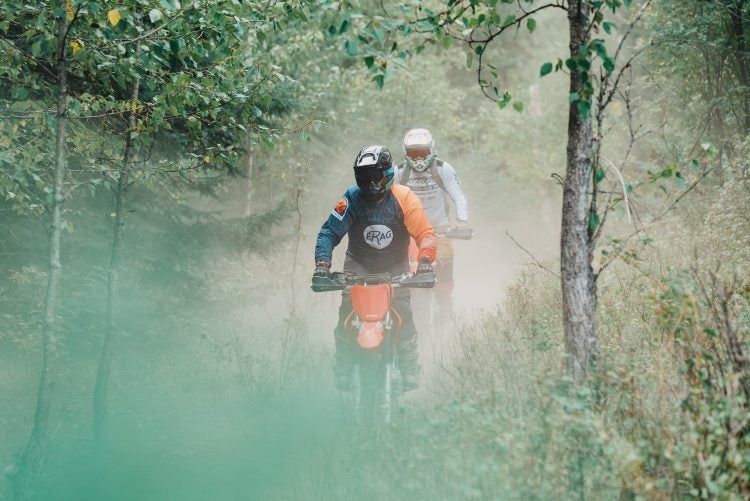
The afternoon’s rides varied in difficulty, with different routes (or different options within the route) for riders of varying skill. Photo: Nick Dunlop
A few words on the training. Most of these drills I’d done before when I attended a single-day program with one of their staffers in 2020. But I packed so much into that single day that I just didn’t have the time to practice or absorb it like I did over the Monday-Friday XTADV school. Now I was doing the same drills but with the advantage of having more time, and having Tim/Satan yell at me when my elbows weren’t stuck out in the breeze as far as he wanted to see, or my testicles weren’t jammed forward far enough on the tank when cornering, or my backside wasn’t hanging out far enough over the rear fender when I was on single-track. You get the idea.
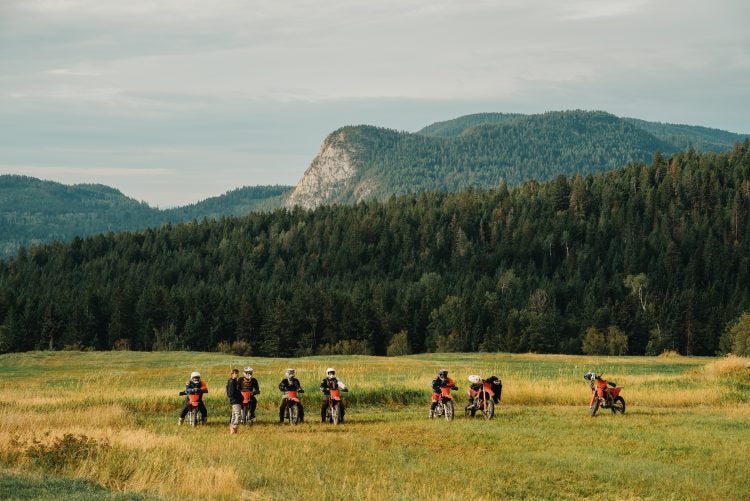
Not many dirt bike training compounds come with scenery like this—or the chance to ride through that scenery after the morning’s lesson. Photo: Nick Dunlop
I don’t want you thinking this was like boot camp, but with dirt bikes. Dallas did most of the instruction, and you can tell he has a lifetime of experience at this; he’s a funny guy, and that goes a long way towards helping the lessons sink in. Together with Tim/Satan, Max and Justin/Georgia (youngest member of the instructor team), we had excellent and constant supervision to help us with what we needed to work on, and that included advice during our afternoon trail rides. And despite the marketing, we were challenged as riders, but we certainly weren’t given anything outside our capability, even for the least-experienced off-roaders. On days when more advanced riders wanted to push harder or farther in the afternoon’s trail ride adventure, the less-experienced riders were given a choice of an easier route.
The theory behind it all
It all comes down to this: While the eRag tours like GrizzBait can indeed be hard-core, Dallas and his team don’t expect anyone to start there.
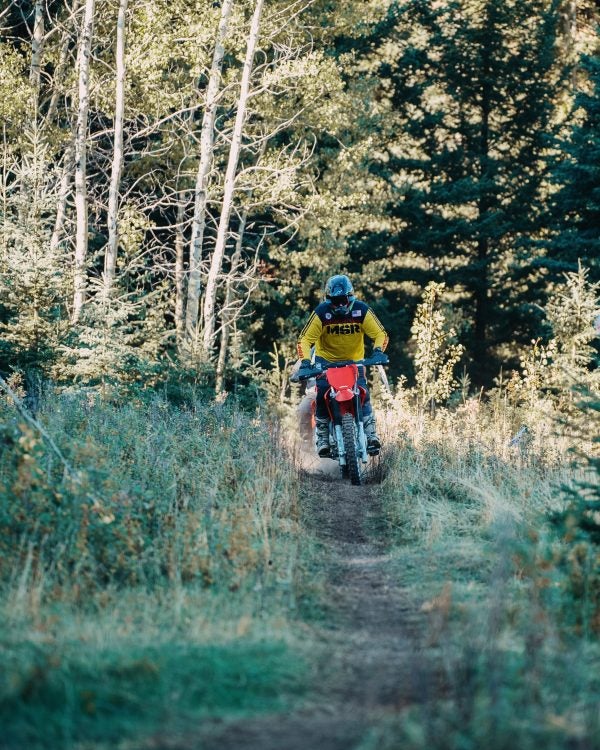
The XTADV program isn’t intended to wear participants down to a crumpled heap. It is intended to meet you at your off-road riding level, whatever that may be, and get you the skills needed to improve your capabilities in the dirt. Photo: Nick Dunlop
They want to develop life-long dirt bike/dual sport/ADV riders, giving them skills early-on that will last them the rest of their riding careers. They want you to feel safe, to be safe, when you’re riding in the dirt, because you have the skills you need. There’s no pin-it talk; they want you to learn the basics like throttle control, clutch control, body positioning in a safe-but-still adventurous environment. This way, you can avoid injury and keep fear at bay.
I think it’s a good idea—and a lot of adventure bikes might push beyond their local Starbucks if their owners had built these skills the safe and proper way.
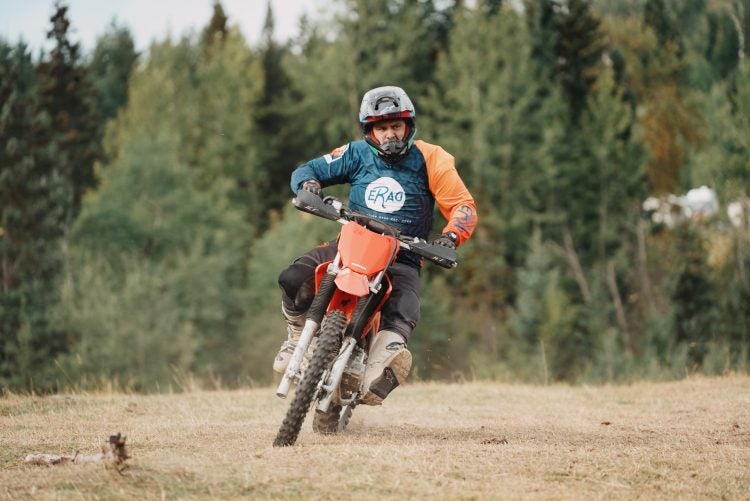
Did my week at camp turn me into Ricky Brabec? No. But it reminded me of stuff I’d learned and forgotten, and I hope those lessons stick with me for the rest of my riding career. Photo: Nick Dunlop
The rest of XTADV
The seat time was fun, and challenging, and as Riley says in his video below, a humbling reminder that we all should be practicing this stuff when we start out, not after we’ve been riding for years (watch for me, I’m the guy in the bright yellow MX jersey).
Obviously the training was the focus, but I’d like to give a shout-out to the rest of the XTADV program—especially the food. With Allison as head chef (herself a moto-mad Vancouverite) helped by camp host Jay (ADVer/dirt biker), we ate the best meals I’ve ever had at a moto event in North America, including some very expensive launches. Breakfast was cooked from scratch each morning, and we had another home-cooked meal every supper (lighter homemade sandwiches for lunch). It was fantastic food.
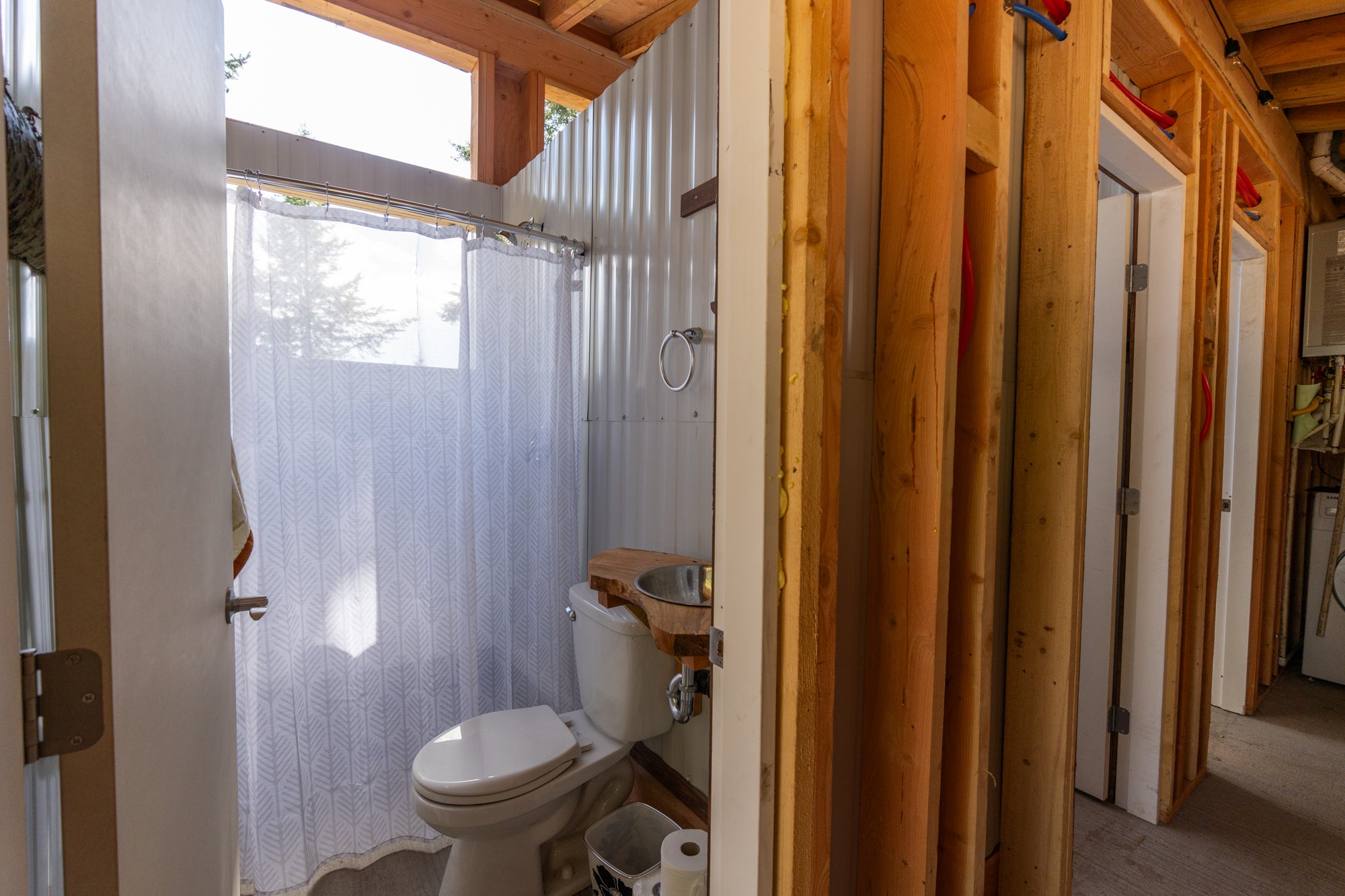
And then there were the accommodations. The cabins were not without their quirks; our lights and our neighbors’ lights would trigger off each others’ remotes. But diesel heaters did a good job of keeping freezing temperatures at bay, and being able to sit on your porch and look at the Kootenays in the evening was a treat. And you could also look at the Kootenays out the shower stall window, since the bathrooms had massive openings letting natural light in.
In fall of 2024, the eRag camp did not have wifi; weak mobile signal was possible on some corners of the property, but part of the idea behind the camp seemed to be a bit of a digital detox. I’m not sure how everyone else felt, but I sure appreciated it. I think they may have wifi in 2025, though.
-
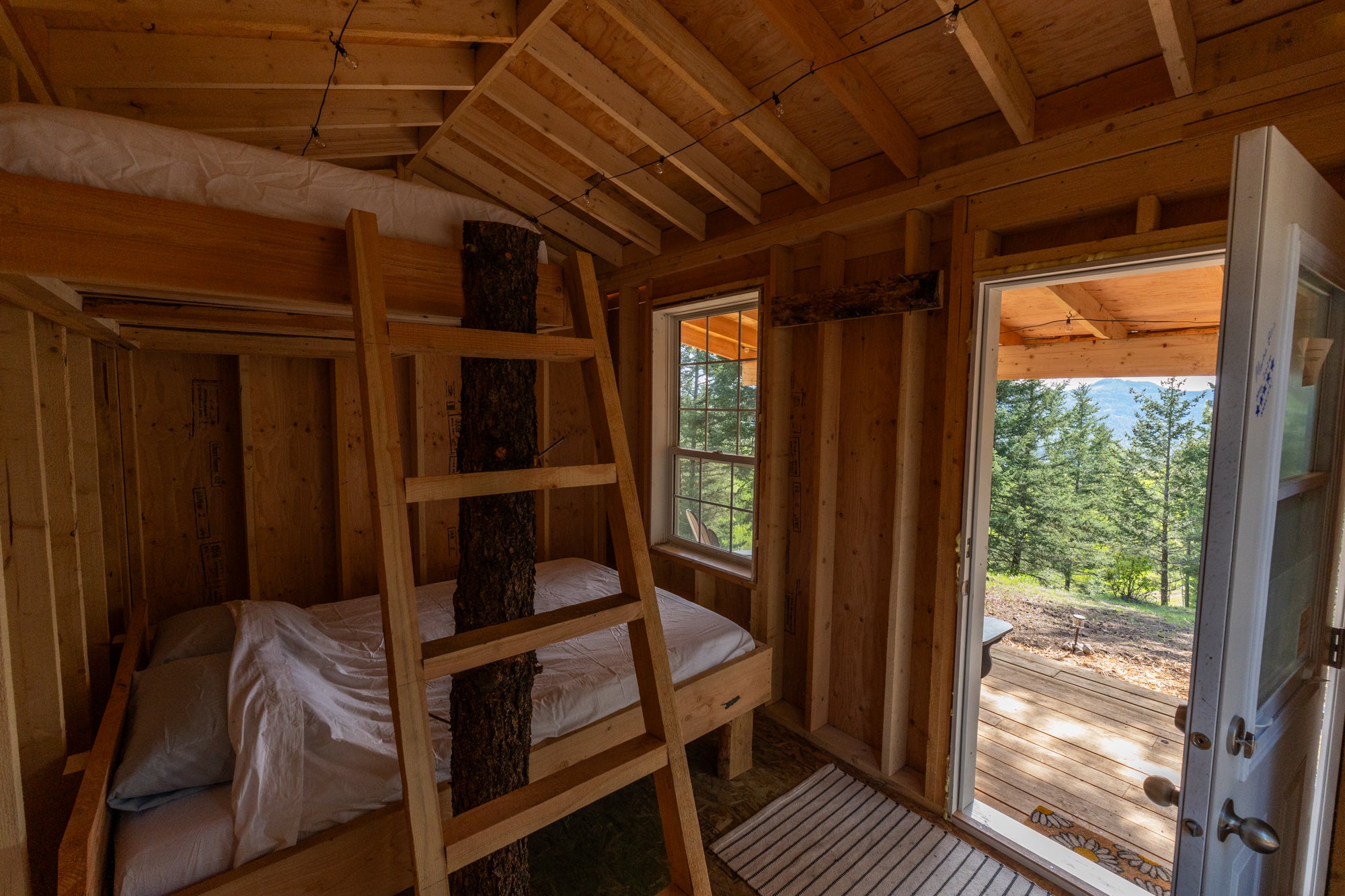
- Your accoms. Basic, but all you need! Photo: Nick Dunlop
-
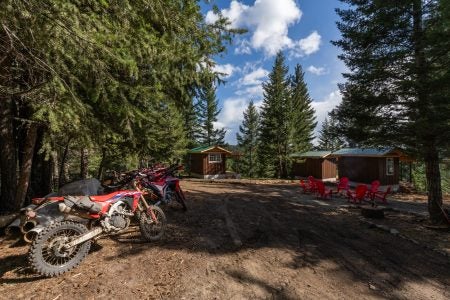
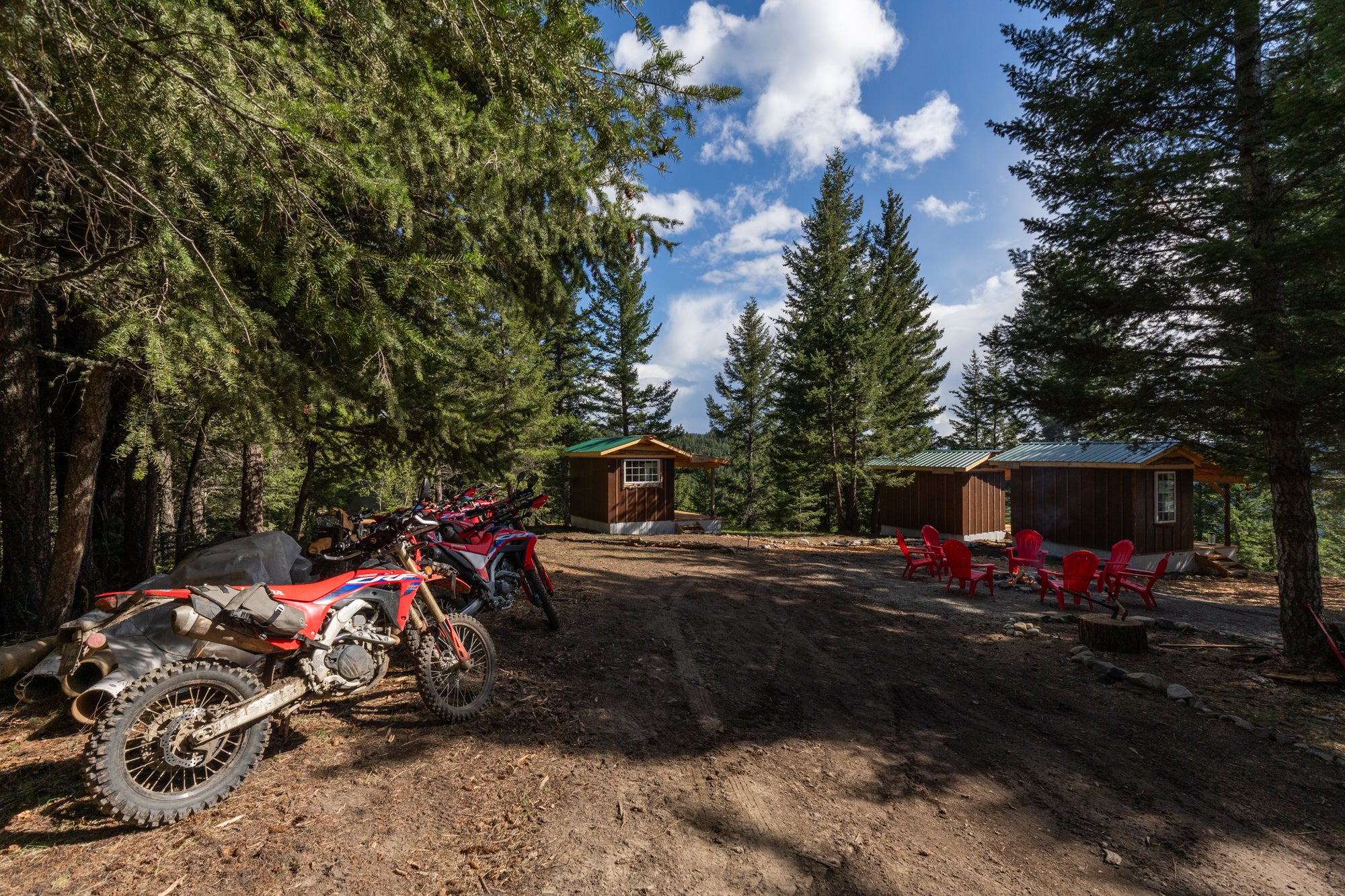
- The camp is small and tidy. You’ll spend a lot of time here in mornings and evenings. Photo: Nick Dunlop
-
- Your washrooms come with surprisingly attractive vistas out that window… even if the open-air breeze is a bit nippy if you’re showering in the morning. Photo: Nick Dunlop
The bottom line
There are many kinds of motorcyclists: Good riders, bad riders and riders who get the job done with zero grace or skill. I would certainly consider myself in the last camp, with a chronic lack of athleticism or any physical talent at all, really. But even for an uncoordinated jerk like myself, skills can be taught over time, and if you love doing something, it is worth learning to do it well—especially if those skills could save your life.

This trip was a much-needed break from the wifi world, and a useful skill upgrade. Not everyone can afford this kind of fun, but even if you can’t, you should be looking for something else that can give you a skills boost. And looking for that digital detox is a good idea too… Photo: Nick Dunlop
Traction eRag is working on its 2025 XTADV plans. They will run the clinics again in May and June next year, at a cost of $4,675 for the week, which doesn’t include your airfare. That’s a lot of money for someone like me, and maybe someone like you. But if you can afford it, consider it. You’re getting training, and you’re having an adventure, and potentially setting yourself up for a lot more enjoyment of your motorcycle in the years to come. To me, that sounds like a lot of bang for your buck—a lot better deal than throwing money at a bike you’re too afraid to ride off-road.