
Photos: Zac Kurylyk, unless otherwise indicated
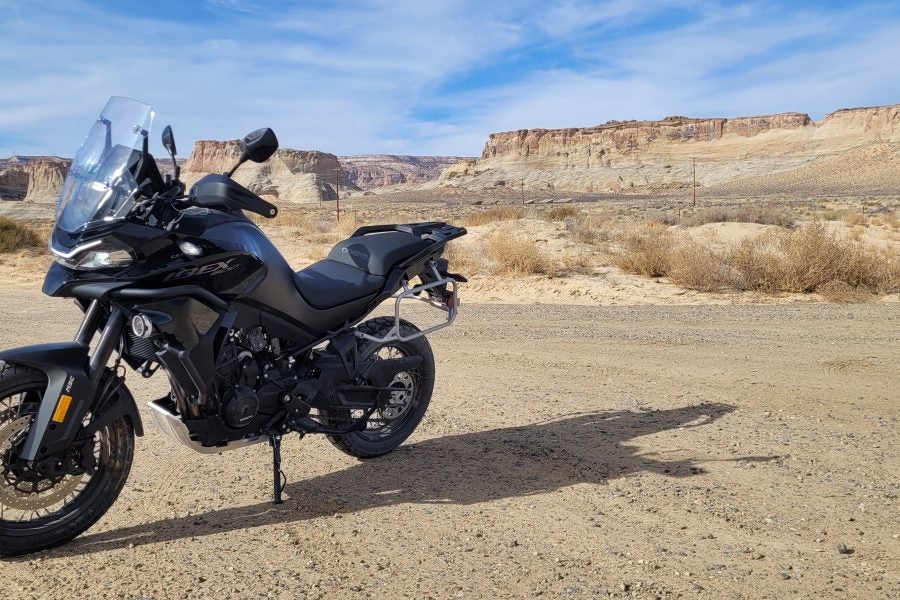
What should you do when you have five free days mid-winter in the southwest? You should head for the hills, pronto, and that’s what I did in early February aboard a CFMOTO Ibex 800 E. I was very curious to see how this Chinese/European collaboration would work over some long-haul riding, and even though my time aboard the bike was short, I think I packed enough miles in to get an answer.
What’s a CFMOTO Ibex 800 E?
Of all the major players in the Chinese moto market these days, CFMOTO is one of the most interesting. Back when other Chinese companies mostly focused on bike exports to the west in the 200cc class, CFMOTO had a 650 parallel twin that looked very similar to Kawasaki’s Versys powerplant. I read good reviews of the bike from Europe, but we never saw those machines in North America in large numbers. But now, in 2025, CFMOTO is taking North America’s motorcycle market seriously. One of the cornerstones of their plan is a middleweight adventure bike built with technology borrowed from their partner, KTM.
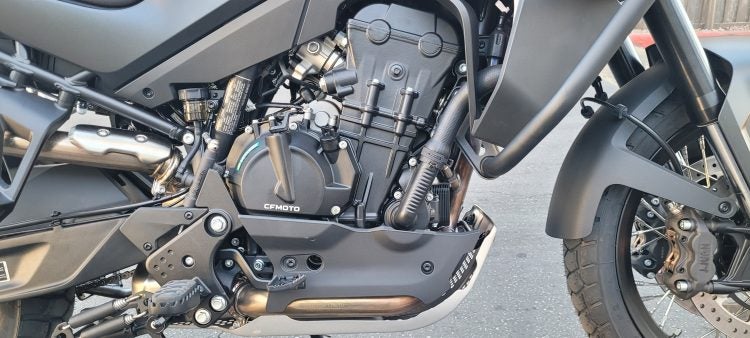
Yeah, we’ve seen that engine before. This is basically the same powerplant as KTM’s 790, but with some different tuning, probably mostly because it uses a different EFI system.
Taking a close look at the CFMOTO Ibex 800 E, it is obviously very closely related to the KTM 790 Adventure, but this isn’t a case of CFMOTO sneakily copying KTM’s homework. CFMOTO is actually KTM’s manufacturing partner, and builds the 790 Adventure for KTM in China. As part of that deal, they also have the rights to build their own take on this design—the 800 Ibex. But take note; there are many similarities between the “European” 790 and the Chinese 800, but there are also several significant differences.
Muscle-building
Those changes start with the parallel twin engine. Make no mistake; this is an LC8c design, just like the KTM 990 and 890 and Husqvarna 901 are all LC8c designs, with DOHC and four-valve heads. Displacement is the same as the 790 engine, and peak horsepower kicks in at 9,000 rpm, same as the 790. Peak power is basically identical, at ~94-95 ponies—basically, it’s a rounding error. But the 800 is rated for just under 57 pound-feet of torque at 6,600 rpm, while the 790 is rated for 60 pound-feet of torque at the same mark.
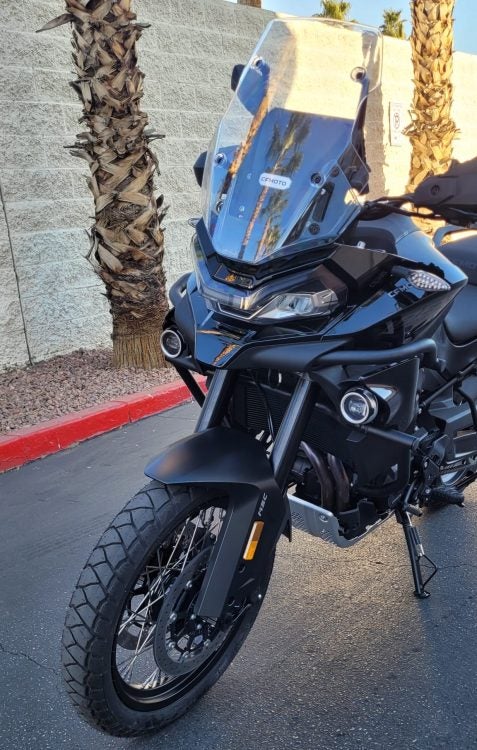
The 800 engine feels almost identical to the 790, with a quickshifter included at no extra cost. Bonus!
Really, that just sounds like a rounding error as well, and few Average Joe riders will notice when they’re in the saddle. I’m just noting it here to say you may get a slightly different power curve than the 790, but it’s basically the same idea.
The CFMOTO 800 has a slipper clutch with up/down quickshifter included as standard (it’s a pay-to-play option on KTM’s lineup). The Chinese engine uses a Bosch EFI system where the KTM version uses DKK Dell’Orto EFI, which is probably the explanation for any significant differences in the power delivery of the respective bikes.
Chassis change-ups
The basic frame design is pretty much the same for the 800 and the 790, but there are other noticeable changes to the hard parts.
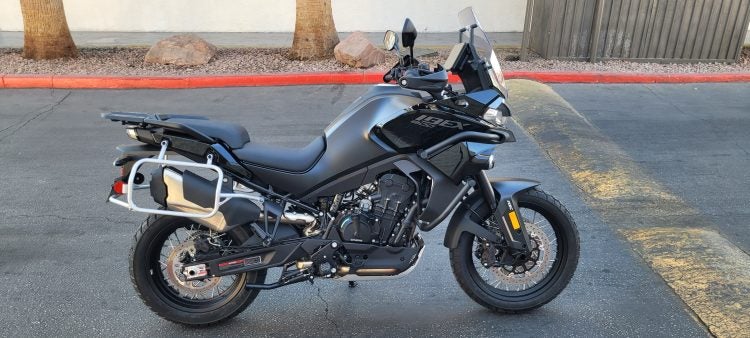
The KTM’s low-slung wraparound tank design carries fuel lower than the Ibex’s traditionally-mounted tank. But if you aren’t off-roading, this is less of a concern, and the Ibex is a street bike first, not intended for the same off-road pace as the 790.
Right away, you’ll notice the Ibex has a gas tank in the traditional over-the-engine mounting position where the KTM’s tank is low-slung along the sides of the engine. This changes your bike’s center of gravity; remember, that unique tank design was one of the most significant features of the first-generation 790 Adventure due to its desirable handling benefits. Fuel capacity on the CFMOTO is 5 gallons, where the KTM claims 5.3 gallons, so there’s no significant difference in volume.
The Ibex also has KYB suspension, with fork adjustable for preload, rebound and compression; the shock is adjustable for preload and rebound. The spec sheet doesn’t list travel length, but it’s obviously different from the 790’s WP APEX suspension, as the 800 also has a 19-inch front wheel and 17-inch rear, where the 790 comes with a 21-18 wheelset. The CFMOTO has spoked aluminum alloy rims set up for tubeless tires.
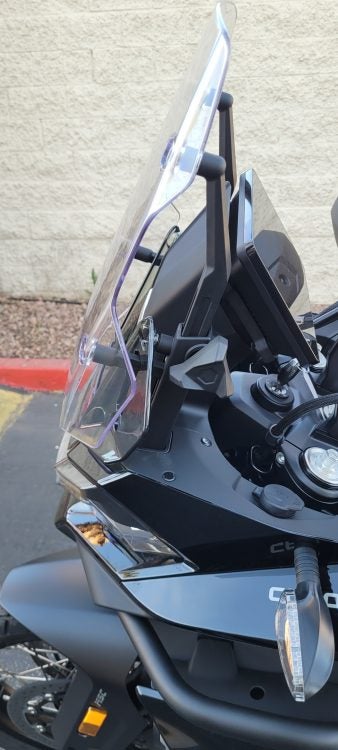
A USB-C port in the fairing beside the screen will keep your phone powered up, or maybe even a GPS in a pinch.
Other details
Bosch cornering-sensitive ABS is standard, along with traction control and wheelie control. The 800 comes with six ride modes built-in. Here’s CFMOTO’s explanation of the modes to their Australian customers:
SPORT: provides the sharpest throttle response and maximum torque output with a low level of TC intervention. Perfect for experienced riders out for a spirited ride on the tarmac.
OFF ROAD: provides a softer throttle response than SPORT with the lowest level of TC intervention.
OFF ROAD+: provides a softer throttle response than SPORT with the lowest level of TC intervention. The rear wheel ABS is also deactivated.
ALL TERRAIN: provides a softer throttle response than OFF-ROAD with no TC intervention. The rear wheel ABS is also deactivated.
ALL TERRAIN+: provides a softer throttle response than OFF-ROAD with no TC intervention. The front and rear wheel ABS are deactivated.
RAIN: provides the softest throttle response and the gentlest power curve with the lowest maximum output and the highest level of TC intervention best suited for wet and slippery conditions
There’s an 8-inch MMI screen on the bike instead of the trim, futuristic TFT that KTM is putting on all its new machines; basically it looks like the previous-gen KTMs. Using Bluetooth, you can connect your phone to the bike with CFMOTO’s RideSync app, and Apple CarPlay is also available, allowing navigation functions, music playback control and incoming call control. Of course you can also see your speed, odometer, rpm, and other useful details, and in conjunction with the left-hand switchgear or the dash’s touchscreen capability, you can switch between ride modes and other electro-safety features.
The dash also offers a proximity warning system, displaying a visual alert when another vehicle is in your blind spot or behind you. There’s a TPMS read-out, and a display for remaining fuel range. Mostly very useful stuff, although I will say that I was unable to get the CFMOTO app working for me—but I think that was a compatibility issue with my Android phone, which had no 5G data as I was roaming out-of-country.
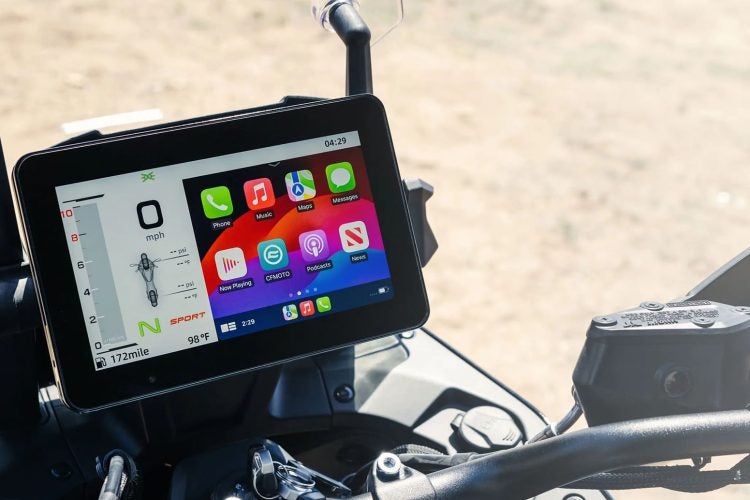
CFMOTO’s dash offers the same trickery and tweaking as the competitors. I prefer KTM’s menu system, but this works fine. Photo: CFMOTO
The dash allows you to turn on the adjustable-level heated grips and seat. Foglamps are controlled by a button on the left-hand switchgear, as is the cruise control.
Finally, taking a step back, the bike does not look like the copy-and-paste design that Chinese manufacturers used in the past, mixing and matching Japanese styling cues. You could argue that it is quite similar to an Africa Twin’s general aesthetic, but it certainly isn’t an egregious copycat. KISKA, the same people who design KTM’s motorcycles, also designed the Ibex 800E’s aesthetic. I believe it; it looks great in-person.
Riding the CFMOTO Ibex 800 E
I jumped on the Ibex just as nightfall and rush hour hit Las Vegas at the same time. On my cross-town jaunt to my extremely shady motel in an extremely shady part of the city, I figured one thing out quickly. Despite the naysayers who poo-poo the bike’s weight after quickly glancing at the spec sheet, the 509-pound-wet machine handles very well in herky-jerky urban traffic. It’s no supermoto, but compared to my bulky old Super Tenere, this thing is a dream to push around.
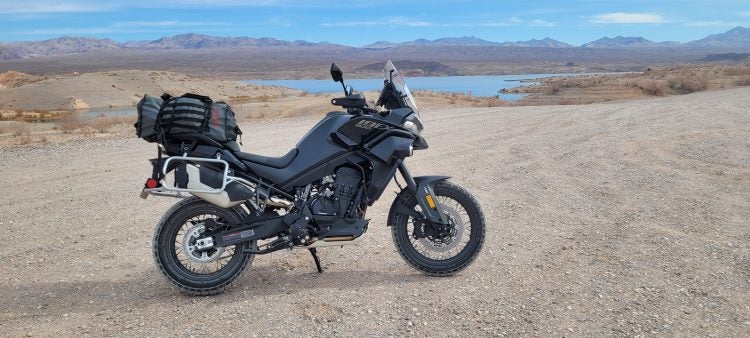
The Lake Mead route was a far preferable option to the Route 15 interstate on my way north to proper riding grounds in Utah. Note that bag strapped to the back; while a sturdy aluminum rack is always a worthwhile addition, the plastic rack that comes stock on this bike will work just fine for casual weekend touring like this. And those side pannier racks come standard as well, so it’s easy to add your own luggage of choice.
That was the theme for the next thousand miles of riding: Myth-busting. The peanut gallery says this bike can’t be reliable or fun because it’s made in China. I can say otherwise. It has plenty of jam, and frankly, the engine feels just like a KTM 790 when you’re in the saddle and that’s a good thing to me because I enjoy the 790 more than the 890. With the smaller engine, you might not have the same muscle available, but you can tap into the available power more quickly and feel like you’re getting more out of the engine.
This, of course, is just my opinion, and a Professional Hoon (which some readers are, and many other readers think they are) will squeeze much more out of the 890 than I will. If they’ve got a need for speed, they will prefer the bigger engine, no doubt. For my money (which I keep a very tight hold on), the 790 is Where It’s At, and I like CFMOTO’s take on it. I did everything from high-speed highway touring to tight parkway lollygagging to twisties in the mountains to backroad bombing across northern Arizona, and I had no niggles at all. No fueling burps, no missed shifts, and plenty of power in every gear. I have ridden other far more expensive motorcycles that I cannot say the same about. This is a great motor for the sensible grown-up who still likes to flog their bike when they’re far from Johnny Law’s prying eyes—civilized for legal speeds, but capable of uncivility if required. All while getting reasonable fuel economy, and without any frustrating vibration.
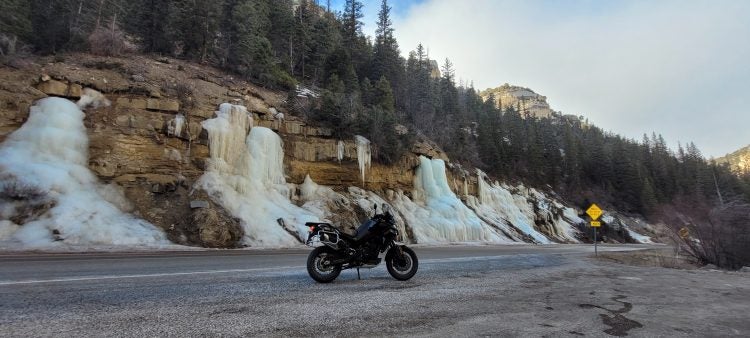
Unfortunately for me, some of the best riding I saw was through areas filled with ice, and I had to keep the pace down as a result.
Also: If you can believe the experts of Facebook, the CFMOTO version of the 790 engine has a lower failure rate than the KTM version. I’m not sure about this, as the engines appear to be essentially identical, but some people say this is the case. YMMV.
On to the chassis. I did not futz around with any of the suspension settings fore or aft, because it felt fine for the legal-ish pace I kept up most of the time. If I was heavily loaded down, or bombing around off-road, then maybe I would have felt the need—but most riders aren’t buying this to tackle dirt at speed anyway, with the 19-17 wheelset.
When I did head off-pavement, I felt the bike was very sure-footed and if you did want to ride the dirt, I think you could push this a lot farther and harder than some of the other bikes on the market with similar 19-17 wheels. Despite a bit more weight and other differences from its progenitor the 790, the CFMOTO still has excellent handling, quality suspension, an electronics package that can be dialed in for the dirt, a good skidplate and basic crash bars and hand guards included as stock. I wouldn’t push the Michelin Anakee Adventures super-hard in sloppy conditions but they were OK on the recreational and farm roads I was on. They are a good compromise for a stock ADV tire, and much better than the no-name rubber that used to come on Chinese bikes. However, I’d replace them if I was serious about off-roading this machine (see this multi-year thread for ADVrider inmates’ insight into these tires).
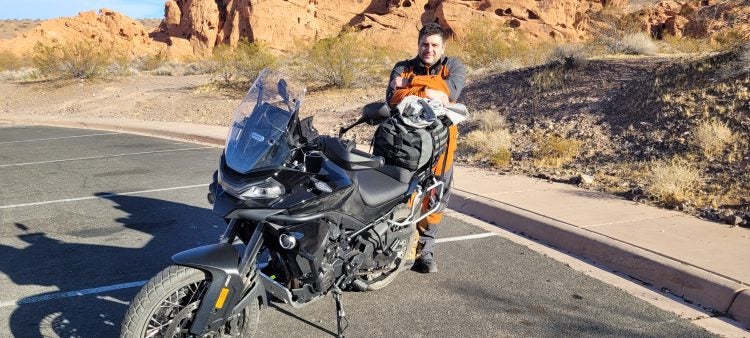
That seat was mucho comfortable for me, and the built-in heater was scorching-hot.
However, I don’t want to leave you with the impression I bashed this thing around in the desert for endless miles. The off-pavement riding I did was limited, and for the most part, at low speeds. I can only say that based off my limited time on desert ranch roads, I would say this bike is probably far more capable in the dirt than most of its buyers will be, even though it’s primarily a street tourer. The few miles I did certainly left me wanting more.
I don’t think it’s a bad thing that CFMOTO built a street-oriented take on the 790 platform; for years, I have wondered why KTM doesn’t do the same. They have S and R versions of their 1390 series and the 1290s before that, and those see limited sales compared to the LC4c engines. Whatever the reason, CFMOTO has beat them to it, and the Ibex 800 E is a fine street bike. The weather worked against me when I was in the twisties (I thought it unwise to push my luck on the high-elevation corners of Utah Route 14, considering it was mid-winter and the passes were full of snow, with thawing run-off streaming across the road). But with the quicker handling of the 19-inch front wheel and suspension that ate up every bump while keeping the rubber planted, I think the Ibex is going to capture the attention of a lot of the back-road touring set.
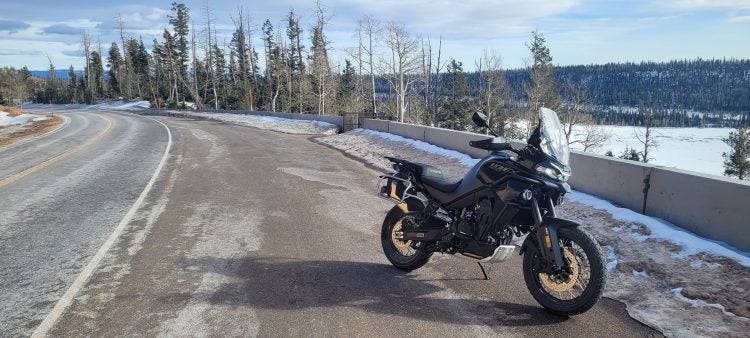
The windscreen and bodywork do a great job of keeping you out of the weather, although I’m sure the aftermarket will quickly offer over-sized options for this machine. And under-sized options, too. That’s how the industry is. But I think the adjustable screen is realistically all that most riders will need.
It might grab the attention of the long-haulers, too, because it’s pretty comfortable on the highway. I did have one day’s ride in southern Utah where a combination of crosswinds, windscreen angle and my helmet position worked together to make a rather horrid screeching sound. If it was really a problem, I could have reconfigured the windscreen to stop the whistling, as it’s manually-adjustable. Aside from that slight niggle, I found the Ibex comfortable, with heated grips keeping you roasty-toasty and a heated seat that I could not run above the Medium setting, as it would start to bake my buns otherwise. I’m not sure what kind of element they used in the seat, but it sure pumps out the BTUs.
As the ultimate comfort test, I did a there-and-back run from St. George, Utah, to Monument Valley on the Arizona/Utah border in a day. That’s about nine hours of riding in mid-winter cold that turned into early-spring warmth at day’s end. It was only at the very end of that day, riding back into St. George in the dark, that I finally felt some saddle cramps, and the rest of my upper body was fine—the screen had broken the windblast nicely all day. For a bike with minimal bodywork, I think the Ibex 800 E keeps the weather off you nicely. I certainly wouldn’t be rushing out to replace the seat either, unless I wanted a flatter one-piece saddle for off-roading.
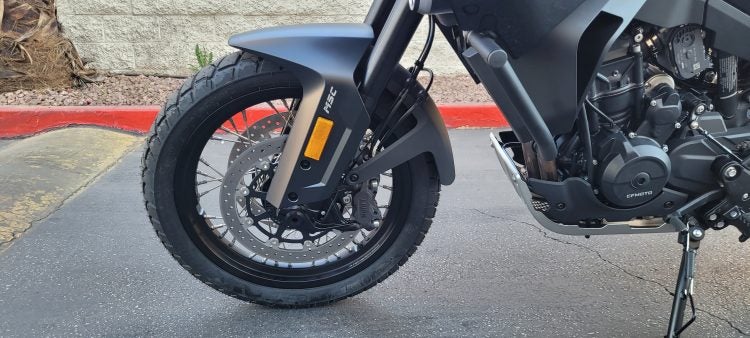
Yeah, you’d probably want new tires if you were pushing this bike off-road, but then, how many stock dual sports and ADVs is that not true of? I think the stock tires are excellent street rubber and good enough to get you started on the gravel.
At the end of five days’ riding, I dropped the bike off with about 1,200 miles racked up on the odometer. I would have liked more time to try a bit more off-roading and to enjoy the twisties of the southwest as the weather warmed that week, but it wasn’t possible. But my time with the CFMOTO Ibex 800 E did leave me convinced of one thing: With a $10,299 MSRP (including a two-year warranty), I think the only factor left to convince a lot of riders to buy this bike is a test ride. With options like quickshifter, pannier rack and skid plate included, which would quickly add up to hundreds of bucks on similar machines from other OEMs, the deal just looks better and better. If I was on the market for something like this, that sales pitch would probably work on me.
It makes me wonder just how good the MT-X, which CFMOTO is basing on the same platform, will be…